
Boot
Everybody drops this in before a single card moves. FairPlay tables open at ₹10, and that figure becomes the floor for every bet in the hand that follows.

Three Cards, One Table
Three cards each, a boot of ₹10, and a hand that finishes before the chai goes cold. Blind and seen betting, chaal, side show and pack, across classic tables plus Joker, AK47 and Muflis. A UPI deposit lands while the dealer is still shuffling.
Hand Rankings
Every deal is drawn from 22,100 possible three-card combinations. The order matters less than knowing how seldom the good ones turn up.
| # | Hand | What it is | Example | How often | Chance |
|---|---|---|---|---|---|
| 1 | Trail (Trio) | Same rank, three times over | A-A-A | 1 in 425 | 0.24% |
| 2 | Pure Sequence | A run inside one suit | A-K-Q of hearts | 1 in 460 | 0.22% |
| 3 | Sequence (Run) | A run, suits ignored | 9-10-J mixed | 1 in 31 | 3.26% |
| 4 | Colour (Flush) | One suit, no run | 2-7-K of spades | 1 in 20 | 4.96% |
| 5 | Pair | Two ranks that match | Q-Q-4 | 1 in 6 | 16.94% |
| 6 | High Card | Nothing at all | A-9-5 mixed | 3 in 4 | 74.39% |
Two oddities to carry in your head. A-K-Q is the top run and A-2-3 is the one directly under it, which puts A-2-3 above K-Q-J — almost nobody believes that the first time they are shown it. The other is the 74.39% sitting in the last row. Three deals out of four hand you nothing, and that one number explains why patience earns more at a full table than bravado does.
How a Hand Runs
A hand of Teen Patti asks less of you than poker does. The interesting part is that you may bet before you have seen a single card.
Everybody drops this in before a single card moves. FairPlay tables open at ₹10, and that figure becomes the floor for every bet in the hand that follows.
You wager with your three cards untouched, at half the rate a seen player pays. Cheap, and it leaks nothing to the table for the good reason that you have nothing to leak.
You have looked. Every round after that costs twice the blind rate, which is the fee the game charges you for knowing your own cards.
Matching the live stake so you stay in the hand. Blind, that is one or two times the stake; seen, it is two or four times it.
One seen player asks the seen player before them for a private comparison. Whoever holds less packs on the spot. The request can be turned down, and the hand simply carries on.
Down to the last two, either player buys a show. Both hands turn face up and the better one collects. Pot-limit tables force this the moment the cap is reached.
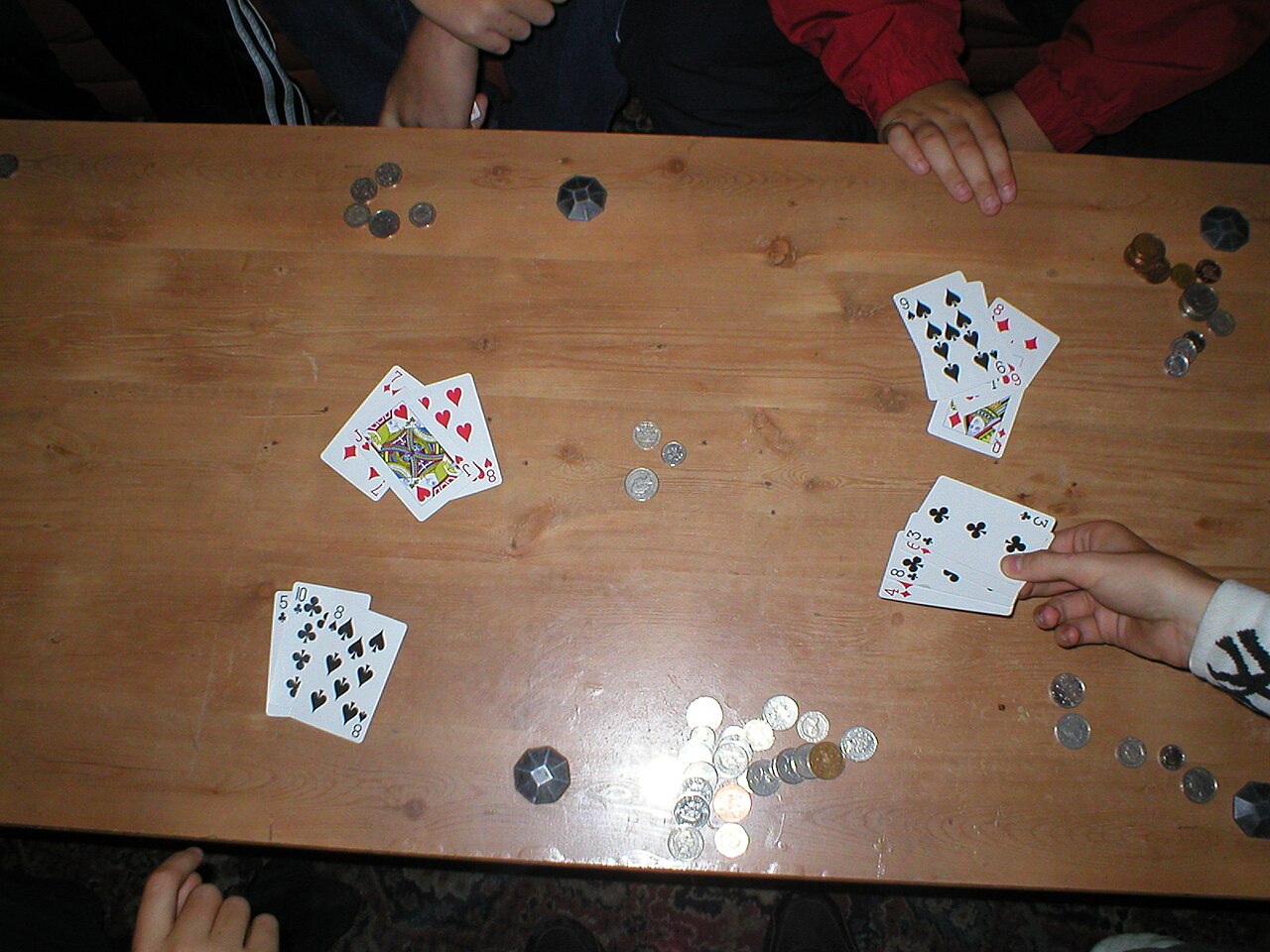
Variants
Carrying classic instincts to an AK47 table is the costliest habit a new player brings along. Read the variant label before you read your cards.
| Variant | What changes | What it does to your hand |
|---|---|---|
| Classic | Ordinary rankings, nothing wild | Pairs collect a great many pots here. This is the version the table above is describing. |
| Joker | Wild cards shuffled into the deck | The typical winning hand climbs. One pair stops being worth a long fight. |
| AK47 | Aces, kings, fours and sevens wild, so 16 wild cards | Trails arrive often enough to stop feeling special. A high card wins no contested pot. |
| Muflis | The order flips: the worst hand takes it | A trail is suddenly the feeblest holding in the room. Every instinct you have is upside down. |
| 999 | Hands scored on how near they land to 999 | The ranking table is irrelevant here. Read the rules panel before you take a seat. |
| 20-20 | A set count of quick rounds with forced action | Almost no scope to sit blind. The format supplies the aggression for you. |
Amritsar in January is a city that disappears after dark. The fog comes in low off the fields somewhere past Attari, and by nine o'clock it has taken Ranjit Avenue street by street until the sodium lamps are only orange smudges hanging in the air. Trains out of Amritsar Junction start running hours behind. Nobody is driving down to Lawrence Road for a plate of kulcha in weather like that, and the shutters on Hall Bazaar come down early.
This has always been Teen Patti season here. Around Lohri the cards come out at somebody's house on Green Avenue, a razai across everybody's knees, one heater working harder than it was built for, and the hands keep going until the fog thins near dawn. On the evenings when I cannot face the drive, I open a ₹10 boot table on my phone instead and play from the same room, under the same razai, with the same cousins arguing on a group call in the background.
The game itself does not change. Three cards, and the same rankings my nani used to recite while she dealt. What changes is the pace, the fact that the money is genuinely money, and the small mercy that nobody at the table can read my face.
Take the way one of those foggy evenings went. I opened the lobby a little after ten, picked a classic table with a ₹10 boot and four seats occupied, and the software had put my ₹10 into the pot before I had properly settled. Three cards arrived face down in front of my name. I left them alone.
First hand: I stayed blind and paid ₹10 a round for three rounds while the player to my left looked immediately and paid ₹20 each time. He packed on the fourth round anyway, and I collected a pot I had put ₹40 into without ever knowing what I was holding. That hand is the entire argument for the blind, delivered in about fifty seconds.
Hands two and three went the other way. I packed both on the first round, ₹10 gone each time, no drama. On the fourth I looked on the second round because the pot had grown enough to matter, found a colour, and paid seen rates from there. The colour held up against a pair. Hands five through nine were the ordinary grind that makes up most of the game: high card, high card, a soft pair I let go of, high card again, and a sequence that walked straight into a better sequence.
Somewhere around the eleventh deal I looked at the clock. Twenty minutes gone, eleven hands played. At my mama's place on Lohri night we would have got through four in that time, with two tea breaks and an argument about whether somebody had glimpsed a card by accident. That gap is the single most important thing to understand about playing online, and everything else on this page is downstream of it.
People arriving from poker find this part strange. A blind player stakes half of what a seen player stakes, in every round, and gives away nothing about their cards for the plain reason that they have not looked at them either.
Put rupees on it. Four of you, ₹10 boot. You stay blind and put in ₹10 a round; the man beside you looked on the first round and is putting in ₹20. Five rounds later you have spent ₹50 and he has spent ₹100. Same pot, same three cards each, half the price. His extra ₹50 has not improved his hand by a single pip — it has only told him what he is stuck with.
The instant you look, your cost doubles for the remainder of the hand. So look at the moment when looking buys you a decision worth making: the pot has grown, somebody is pushing, and you need to know whether to commit properly or step away. Looking on the first round because you cannot bear not to is how a ₹10 table quietly turns into a three-hundred-rupee evening.
There is a ceiling on this, mind. Pot-limit tables force a show once the cap is hit, so the blind cannot simply ride cheaply forever the way it can at a family table where the hand runs until somebody gives up. Blind is a discount on the early rounds, not a licence to sit in a hand you would never pay full price for.
Go back to the table above for a second. High card comes out 74.39% of the time. A pair arrives once in six deals, a colour once in twenty, a sequence once in thirty-one, a trail once in 425 and a pure sequence once in 460.
Read that as a room rather than as a list. At a four-handed table, most rounds nobody is holding anything at all. Which means most pots are not won by cards. They are won by whichever player is still willing to push ₹10 or ₹20 forward once the others have decided the hand is not worth the trouble.
That cuts in both directions, and the second direction is the expensive one. Aggression works here far more often than it does across a poker table, which is why the loud cousin at every Lohri session does better than his cards deserve. It also means that calling round after round with a middling pair, waiting patiently for it to become good enough, is the standard way to lose two hundred rupees without ever making a mistake you could point to afterwards.
Asking for a side show pulls one opponent into a private comparison with you, and whoever is holding less packs immediately. Used properly it removes a body from a crowded pot for roughly the price of a chaal, at a moment when you are genuinely holding something.
Used badly it does two things you will not enjoy. It burns your real hand against a player who was one round away from packing on his own. And if he refuses, the refusal is public — everybody at the table now knows you were not confident enough to keep betting in the ordinary way. Ask because you want a particular player gone. Never ask because you want to find out where you stand.
An AK47 table carries sixteen wild cards. Trails turn up often enough that they stop feeling like an event, and a pair is close to worthless. A Muflis table inverts the order outright, so the trail you were delighted to be dealt is now the weakest holding in the room and your job is to lose the show. A 999 table does not use these rankings at all; it scores hands on how near they land to 999, which is a different game wearing the same clothes.
None of these are classic with a decoration on top. They change which cards are worth spending money on, and that is as fundamental as a change gets. The habit worth building is dull and it works: read the variant label on the table before you read your own cards, and if it is anything other than classic, play the first few hands smaller than usual until the new arithmetic feels ordinary. Our live casino guide covers how the dealer studios run, and Andar Bahar is worth a look on a night when you want something quicker with a lower house edge.
At home, two stubborn players can keep one hand alive until somebody runs out of patience or cash. Online tables carry a pot limit. Once the pot reaches the cap a show is forced, the cards go face up, and the hand ends whether either player wanted it to or not. That single rule strips out the war of attrition that decides so many hands at a Lohri table, and it is the adjustment most new players never consciously make.
The other missing piece is the face. No pause before a chaal, no glance down at the cards, no cousin who cannot stop grinning when he has a trail. All you have is bet size and how long somebody takes to act — which is exactly why the player who keeps both of those steady is far harder to beat on a screen than he ever was across a room. Watch for the opposite too: the man who acts instantly on rubbish and thinks for eight seconds when he is strong tells you more about himself in ten hands than he realises.
There is nothing Amritsar-specific about the account itself, and that is worth saying plainly because plenty of people assume otherwise. A ₹10 boot is a ₹10 boot in Amritsar, in Ludhiana, on the Shatabdi down to Delhi and in a hotel room in Bengaluru. Same tables, same six variants, same wallet balance, same login details. FairPlay India sets out how the platform works across the country, including which payment routes tend to move fastest.
What does travel with you is your connection, and that deserves a thought during the fog weeks. A live dealer table is video, and video on a weak signal is where people misclick a chaal or time out of a hand they meant to play. If you are on the GT Road in a moving car, or in a basement shop off Katra Jaimal Singh where the bars vanish, drop to a smaller stake or leave it for later. Nobody has ever regretted packing a hand because the network was poor.
Language, currency and support behave identically wherever you sign in. Balances are in rupees, deposits go through the same UPI apps, and support answers in the same channels at three in the morning as at three in the afternoon. Your Teen Patti history sits in the same account as your cricket bets, so a Punjab Kings match on the sportsbook and a ₹10 table in the casino draw on one balance rather than two.
A lot of people read a page like this, decide the game looks perfectly manageable, and then stall at the sign-up. It is a short job. FairPlay register walks through the whole thing: a mobile number, an OTP, a password you have not used anywhere else, and you are in. Identity verification follows — Aadhaar or PAN, plus a bank account in your own name — and it is worth finishing on day one rather than on the evening you first want money out.
After that, FairPlay login is the only door you need, and there are good reasons to reach it from your own saved bookmark rather than from a search box each time. More on that in a moment.
For a first session, do the boring version. Put a small amount in over UPI, sit at a ₹10 classic table rather than a Joker or AK47 one, and play blind for the first three or four hands just to feel the rhythm of the timer. Twenty minutes of that teaches you more than an hour of reading rules. Tables run 24x7, so there is no rush and no prime hour you need to catch — the ₹10 room at four on a Tuesday afternoon plays the same as the ₹10 room on Lohri night.
This is the part I would tell a younger cousin before anything else. Search for a card table on a phone in Punjab and within a day or two somebody will message you offering an ID: a ready-made account, a bonus that sounds far too generous, sometimes a hint that the cards at their table fall in your favour. Some work over WhatsApp, some run Telegram groups with hundreds of members and screenshots of wins that never happened.
Pull the offer apart and it is always the same shape. The account is not yours, it is theirs, with your money sitting inside it. The moment there is a balance worth taking, the number stops replying and the group goes quiet. There is no version of this where handing your deposit to a stranger is quicker or safer than putting it in yourself over UPI, which takes seconds and leaves the money in an account with your own name on it.
The second trick is the lookalike login page. An advert or a forwarded link takes you somewhere that looks right, you type your number and password, and now they have both. The defences are unglamorous and they work. Reach the site through your own bookmark. Check the address bar before you type anything into it. Never enter a password on a page you arrived at from a message. Keep a password that is used nowhere else, so one leak stays one leak. And if anyone claiming to be support asks for your password or an OTP, they are not support — nobody legitimate ever needs either of those.
Treat any promise of a fixed or guaranteed hand as a confession rather than an offer. Cards come off a shuffled deck, which is the whole point of sitting down. Anybody who says otherwise is telling you what they intend to do to you.
Tables open at a ₹10 boot and climb from there, with the boot, the chaal limits and the pot cap all displayed before you sit. Because a hand settles in well under a minute, a Teen Patti table gets through far more rounds in an hour than a cricket bet ever could. That is precisely why a session budget matters more here, not less. Eleven hands in twenty minutes is a pleasant pace to play at and a quick pace to lose at.
Decide the number before you sit down, not at the point where you are behind and it has started to feel like a sum you can solve. Set a deposit or loss limit in your account first; responsible gaming explains where those controls live, and support will apply one for you in a minute if you would rather it were not easy to undo. Winnings settle into your wallet as each hand finishes, and a withdrawal from a verified account normally reaches your bank in under ten minutes.
The last thing is what I think of as the Lohri rule, and I mean it seriously. At a family table somebody eventually announces that it is late and the cards get put away. Online, nothing says that. The tables run 24x7 and the fog outside does not lift any sooner because you are down ₹400. Set an alarm, or a limit, or both, and treat the alarm as the person who announces it is late. Teen Patti tables here are for players aged 18 and over.
FAQ
Rules, rankings and the money side, answered without the padding.
The boot goes in from everybody, three cards come down face down, and betting travels clockwise. You either stay blind, wagering with your cards untouched, or you look and pay seen rates at double the price. Players chaal, raise or pack in turn until one is left standing or the last two buy a show, at which point the stronger hand collects the pot. FairPlay boots open at ₹10 and most hands are done inside a minute.
A trail, meaning three cards of one rank, and A-A-A sits at the top of those. Under a trail sit the pure sequence, then the plain sequence, then colour, then pair, with high card propping up the bottom. Watch the two run oddities: A-K-Q is the best sequence going, and A-2-3 is the one directly beneath it, which puts A-2-3 above K-Q-J.
This one is tradition rather than mathematics. The deck holds 52 possible trails against 48 possible pure sequences among 22,100 three-card hands, so the pure sequence is marginally scarcer and it still loses. The order came down from the parlour game rather than from a probability table, and this is the single point where the two part company.
Blind is half the price every round and it gives away nothing, because you know nothing yourself. At a table where the others peek straight away, sitting blind for a few rounds keeps your spend low while they pay double for information they cannot act on cheaply. Look at the point where the pot has grown enough that you face a real decision, not on the first round because your fingers itched.
A side show, sometimes called a compromise, is a private comparison between you and the seen player immediately before you. Whoever is weaker packs at once. Your opponent may decline, and the hand carries on as normal. Use it to clear one body out of a crowded pot while you hold something genuine. Do not use it to satisfy curiosity, because a refusal is itself a message to everyone watching.
Classic, Joker, AK47, Muflis, 999 and 20-20. Joker and AK47 put wild cards into the deck, which drags the average winning hand a long way upwards. Muflis flips the order so the feeblest holding takes the pot. Every table names its variant before you join, and the rules sit on the table itself.
Three ways. Speed, first: thirty to sixty seconds a round against the several minutes a family hand takes. Reads, second: there is no face to study, so bet size and timing are the only tells available. And every table carries a pot limit, so a show is forced once the pot hits the cap rather than two stubborn players going on all night.
Live tables begin at a ₹10 boot, with higher-limit and VIP rooms running above that. The boot, the chaal limits and the pot cap are all printed before you take a seat. UPI deposits clear in seconds, which makes shifting between stake levels between hands straightforward.
Explore FairPlay