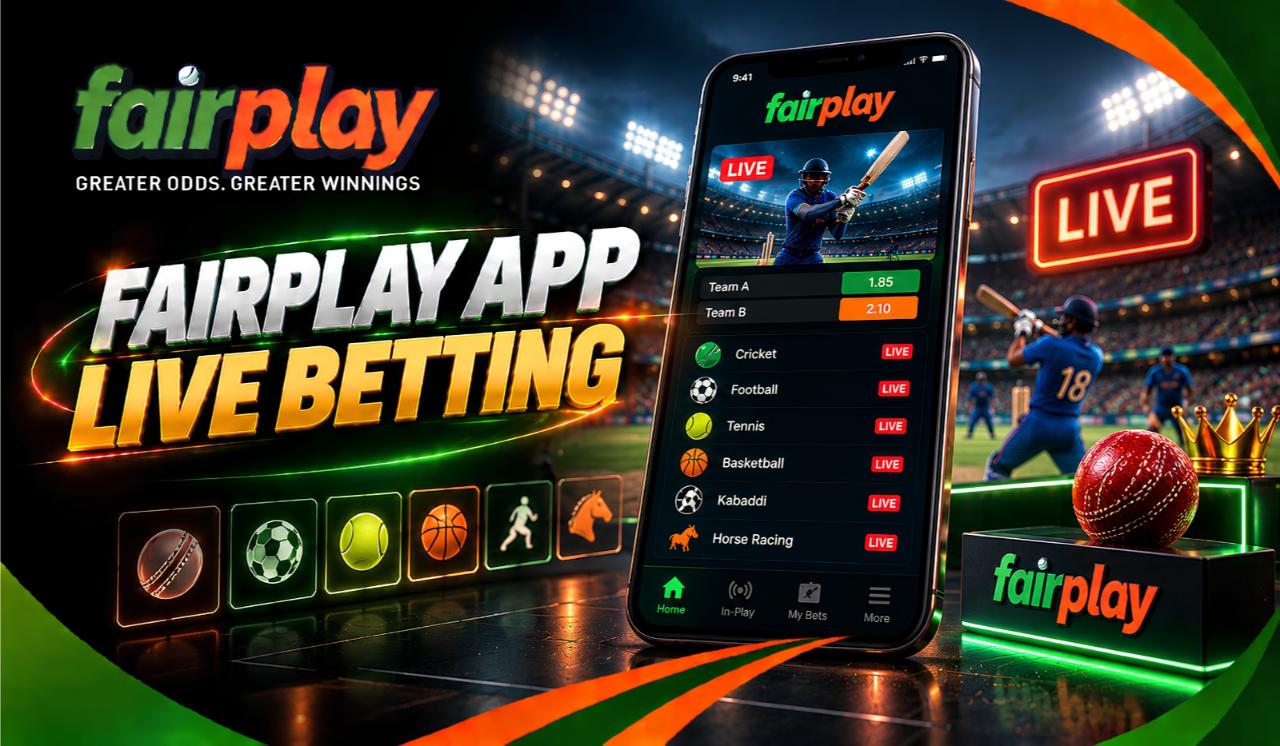
What the app changes on a wet Patna evening
Late July, Kankarbagh, rain coming down in that flat sheet which turns the lane outside into an ankle-deep stream within minutes. The Patna Pirates were three points behind with four on the clock and I was watching on a phone propped against a steel tumbler on the terrace, because the power had gone and the television with it. The mobile site was doing what any browser does on a loaded tower at half past nine in a colony that dense: fetching a price, showing it, then quietly going away to fetch it again. By the time the page had settled, the raid I wanted to back was already over and the number had moved.
That is the entire argument for installing anything, and it is a narrow one. Not speed as a slogan. Speed as the difference between a market you can still act on and one that closed while your screen was blank.
What actually happens when a raid goes to review
Take that Pirates match as the worked example, because a kabaddi review is the cleanest version of the thing. The raider goes in, there is a tangle on the mat, the umpire calls for a review, and suddenly a do-or-die raid is worth arguing about. During those ten or fifteen seconds the market for the next raid does not vanish. It shifts. On the mobile site you are looking at whatever price your browser last managed to collect. In the app the same number moves under your thumb without the screen going white, because the connection is held open instead of being asked for again.
So the sequence runs like this. The bet slip is already sitting open, the stake box still carries whatever you used last — say ₹200, if that is the size you were playing that night — and the only judgement left is whether the new price is worth taking. Two taps. The confirmation appears in the same panel rather than on a page you have to scroll back through. Nothing reloads, so you never lose your place in the market list.
On home Wi-Fi at four in the afternoon none of this is noticeable. At nine in the evening, on mobile data, in a building where every second flat is streaming the same fixture through the same tower, it is the whole point. If you mostly place your bets before a match begins, be honest with yourself and skip the install — the site is simpler and it will not cost you anything.
Why there is no listing on the Play Store
Google will not carry real-money betting apps in India, so every operator in this line hands out the Android build from its own site as a plain package file. Nothing about that is unusual for the category, and nothing about it is hidden. It does, though, remove a layer you are used to leaning on without thinking, and that layer deserves naming.
What a store really provides is a vouch for the source. Without one, the vouching falls to you, and it amounts to two small checks rather than any real effort: begin the download on this page, then compare the version number and the file size on your phone against the pair printed beside the button. A rebuilt package is a perfect lookalike — same icon, same login screen, same colours — and it will accept your number and password politely before doing anything else with them.
The forwarded file, and the messages that come with it
Bad copies rarely find people through a search engine. They arrive in groups. Somebody in a Patna cricket group forwards a file along with a line about a bonus that closes tonight, and because it came from a name you recognise rather than a stranger, the file borrows a trust the sender never earned. He was forwarded it too, by somebody who was forwarded it as well. If a bonus is real it will be sitting in your account under promotions, where you can read the terms; nobody has to send you an installer to give you one.
The second version comes as a phone call. The caller is polite, says he is from support, reads your registered mobile number back to you correctly to prove it, and then asks for the code that has just arrived by SMS so he can release a withdrawal that is supposedly stuck. Support never needs that code. Nobody legitimate ever does, because the entire purpose of an OTP is to prove the phone is in your hand and not in his. End the call, then reach customer support through the channel listed on this site rather than the number that rang you.
The third is a payment link, usually on WhatsApp, dressed up as a collect request with an operator name typed into the note field. Anyone can type anything into that field. A deposit begins inside your own account, on the deposit screen, and never from a link somebody sent you. If money is going to leave your bank, you should be the one who opened the page it leaves from. Approving a collect request is you pushing the money out, and no bank will pull it back afterwards.
Alerts change how you follow a night of fixtures
Push notifications are the second reason to install and the one people underrate until they have lived with them. A wicket, a goal, a raid point — the phone tells you, and you stop holding a screen awake for something that may not happen for another forty minutes. On a working evening that is the difference between following three matches and following none of them properly.
Set them per fixture rather than switching everything on at once. A full Saturday might hold a Pirates tie, a Pro Kabaddi card, a Ranji match at Moin-ul-Haq that almost nobody else is watching, and late European football. Alert on all of it and within a day you are clearing notifications without reading them, which is precisely when the one that mattered slips past. Three fixtures is roughly where the alerts still carry meaning.
Watch the data, not the download size
People fret about a 19 MB file and then stream a match in HD. The install is a rounding error against a month of usage; the video is not. An hour spent watching prices move costs somewhere near 40 MB, which no daily pack sold in Bihar will even register. Video runs to about 315 MB an hour at standard quality and 675 MB in HD, so an HD stream clears a 1.5 GB daily allowance in roughly two hours and leaves you crawling for the rest of the night.
The habit that works here: keep the match on the television while the power holds, and keep the app for the market. You get the picture and the quickest numbers together, and the data cost stays around 40 MB. On the evenings the power does not hold, and in July it often does not, standard quality is the sensible compromise rather than HD.
One account, the same in Patna and everywhere else
There is no Patna edition of the account. The same sign-in opens the same balance, the same open bets and the same limits whether you are on a terrace in Kankarbagh, on a train pulling out of Patna Junction, or at a cousin's place two states away. None of it is tied to the tower you happen to be standing under, and nothing about the odds changes with your pin code.
That matters more than it sounds once you travel. A bet placed on home Wi-Fi shows up a minute later on mobile data out in Danapur, settling exactly the same way, because the account lives on the server and not on the handset. Change phones and you simply sign in again — the history is already there waiting. FairPlay India covers the parts that really are national: which payment rails work, the fact that everyone downloads the identical build, and when support is reachable.
The practical shape of it is one install on the phone you carry, the mobile site for anything you borrow, and the same FairPlay login across both. Two devices does not mean two accounts, and you should never need a second one. If you find yourself opening one, something has gone wrong and support is the right stop before you do.
If you have not registered yet
Installing and opening an account are separate jobs, and doing them in the wrong order only means reading warning screens for no reward. Open the account first. FairPlay register wants a mobile number, a password and the verification code that follows, and it is the identical form whether you meet it in the app or in a browser tab.
Two details save trouble months later. Use the number you actually intend to keep, since verification and payouts both lean on it — changing it afterwards is possible but slower than doing it right once. And enter your name exactly as it reads on the document you will eventually upload. An initial spelled out on one and shortened on the other is the commonest reason a first withdrawal sits waiting while somebody checks it by hand.
Once that is done the app opens into a signed-in session and stays that way. You will only meet the sign-in screen again after a deliberate sign-out or a reinstall, which is also why the phone itself deserves a lock screen you trust.
Updates, limits and knowing where the ceiling is
Releases in this category are not about button colours. They carry changes to how odds are handled and how payment methods are routed, which is why an old build is so often the reason a deposit option that worked last month has quietly disappeared from the list. With no store updating things in the background, the app raises the flag itself and you collect the full file once more. Installing over the top preserves your session and your history.
The limits are the part I would set before a first deposit rather than after a bad week. Deposit caps, loss caps and self-exclusion all sit in account settings, they bite the moment you save them, and loosening one takes a cooling-off period by design — responsible gaming sets out how each of them behaves. Notifications exist to make betting easier to reach, which is exactly the reason the ceiling should already be in place before the first alert buzzes on a wet Tuesday. The app is for users aged 18 and over, and a phone that anyone in the house can pick up is a poor place to leave a signed-in betting account.