
Monsoon cards
Win, place, each-way, forecast and tanala on the Pune meetings, with the going and the non-runners refreshed as the afternoon moves.

Kothrud · Deccan · Marathi on chat
A flat in Kothrud, rain since Thursday, and a race meeting happening on the far side of the city. That is the ordinary way FairPlay gets used in Pune through the monsoon — not at the rail, but on a phone leaned against a glass of chai, watching a going board that keeps changing its mind.
The Pune Year
A racing season timed deliberately against the rest of the country, a kabaddi side the city grew itself, and cricket out past Chandni Chowk.
| What | Where | When | Why it matters |
|---|---|---|---|
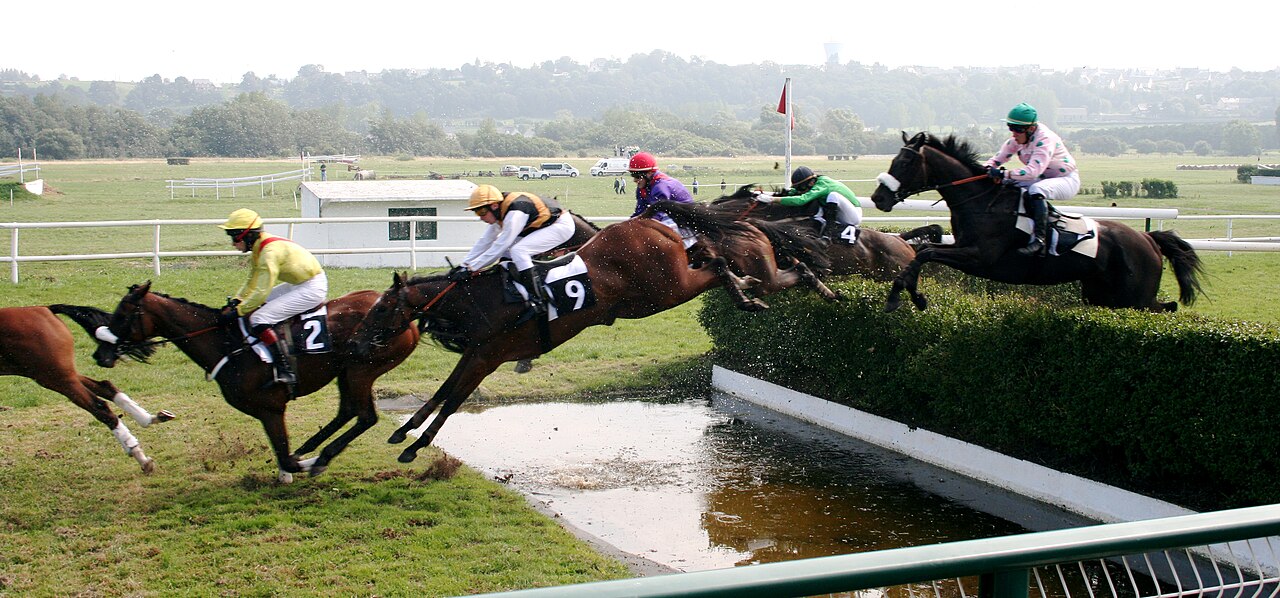
| Monsoon racing | Pune Race Course | July to October | The rains are the season here rather than a threat to it, and the strip can be a different track by the last race. |
| Pro Kabaddi — Puneri Paltan | Balewadi sports complex | Season runs into the winter | Balewadi fills with people who learned the sport on a maidan, not from a broadcast. |
| Cricket at Gahunje | MCA Stadium | Across the season | Far enough out towards the expressway that the drive, not the fixture, decides who turns up on a weeknight. |
| Domestic cricket | MCA Stadium and city grounds | Ranji and limited-overs season | Maharashtra's own season, carried on the same screen and priced alongside the internationals. |
| ISL and European football | Anywhere with a screen | September to May | Indian kick-offs after dinner, then European fixtures running long past midnight IST. |
| IPL | MCA Stadium and nationwide | March to May | Gahunje has staged tournament cricket, and every match is priced whether or not Pune is hosting one. |
For Pune Players
Local cards priced properly, Marathi on chat when you need it, and banking that runs on Indian rails.
Win, place, each-way, forecast and tanala on the Pune meetings, with the going and the non-runners refreshed as the afternoon moves.
Match winner, total points, raid and tackle lines and handicaps right through the Pro Kabaddi season, all of it priced in play.
Match odds, innings totals and over-by-over in-play, on internationals and on Maharashtra's domestic games out at Gahunje.
Chat and WhatsApp answer in Marathi at any hour, with Hindi and English alongside, race days very much included.
Indian Super League in the evening and European fixtures deep into the night, all of it from the one account.
Any UPI app deposits straight away, and withdrawals return to the bank account that matches your verified name.
It rained on the Paud Road side of Kothrud from Thursday afternoon through to Friday night. Not a downpour — the steady, unglamorous kind that soaks everything and never quite stops. By Saturday morning the lanes off DP Road had that dark washed look, and a friend who has followed the racing here since his Fergusson days had already decided he was not driving across town to the course. He took the card from his first-floor flat instead, phone propped against a steel glass of chai, window open, because the smell after four days of rain is half the reason people put up with living on this side of the city.
That is what a Pune meeting looks like for most of the people betting on it. The racing is on the far side of town, the rain is on your side of it, and the thing you are really watching is a going board. From July to October the season here runs in the middle of the monsoon rather than waiting politely for it to pass, and that makes the ground the loudest fact on the card. Weights, the draw, the jockey, the recent form — all of it argues with the ground rather than over the top of it.
He had two races marked in the morning. By the fourth, one of those opinions had stopped making sense, and he could say exactly why. This is the bit worth understanding, because it repeats all season.
The board read good to soft for the first race. Fair enough — near enough to what the morning had promised. Then, somewhere between the second and the third, a burst came over from behind Chandni Chowk, the sort that arrives sideways for eleven minutes and stops as abruptly as it started. Pune gets these all season. From a balcony in Kothrud they barely register. They do a great deal to a racing surface.
By the fourth, the board said soft. That single word rearranged the race. The horse he liked had built its figures on quick ground somewhere else entirely and had never been asked to haul its feet out of holding turf. The one he had crossed off had spent three seasons doing little else. In the morning market, say the first was trading around 2.40 and the second nearer 5.00. By the off those two prices had walked a long way towards each other, because everybody reading the same board had reached the same conclusion at roughly the same moment.
The lesson is not that he should have switched horses. It is that a change in the going is a real event and a public one. It appears on the board, it moves the price, and it moves it quickly. A Pune card in August is one of the few places in Indian racing where you can sit and watch a market re-price itself around a fact of weather. Being ten minutes late to that reading is the difference between taking a price and paying one.
A hedged illustration, because the arithmetic is worth carrying in your head. Say you take 3.20 about a horse you rate on soft ground, before the board catches up, and you stake ₹1,000. Returned at that price, that is ₹3,200 back including the stake. Take the same horse at 2.50 once the market has adjusted and the same ₹1,000 returns ₹2,500. Same horse, same race, same opinion, same afternoon. The only thing that changed is whether you read the ground before everyone else did or after.
There is a temptation to file the going as a footnote, the way the breeze is a footnote in cricket. It does not work like that. Soft turf asks a horse to lift its feet out of the ground on every stride instead of skimming across the top, and that is a different physical job. Some horses have the action for it and spend the monsoon looking better than their overall record suggests they should. Others are simply not the same animal once the ground eases, and no amount of class rescues them.
The practical version: through these months a horse's record on similar going is worth more than its record overall, and a great deal more than what it did last time out on a surface it will not meet again until the winter. A course specialist that keeps turning up in the rain and running its race is usually a better idea than the one that won impressively somewhere fast in April. How the going sits next to weight, the draw and recent form is laid out on the horse racing page.
Here is the habit worth building. Read the board before every race, not once in the morning and then never again. Monsoon rain here arrives in bursts and clears again, so a card can genuinely ride good, then soft, then drying out, inside one afternoon. The official going description gets updated through the day precisely because the people writing it know that.
Which means a meeting here is not one afternoon with six races inside it. It is closer to several short afternoons in a row, each with conditions of its own, and the form you did at eleven in the morning has a shelf life measured in hours. Where this course sits inside the state's wider racing structure is covered on the Maharashtra page. This page is about what goes on inside the season itself.
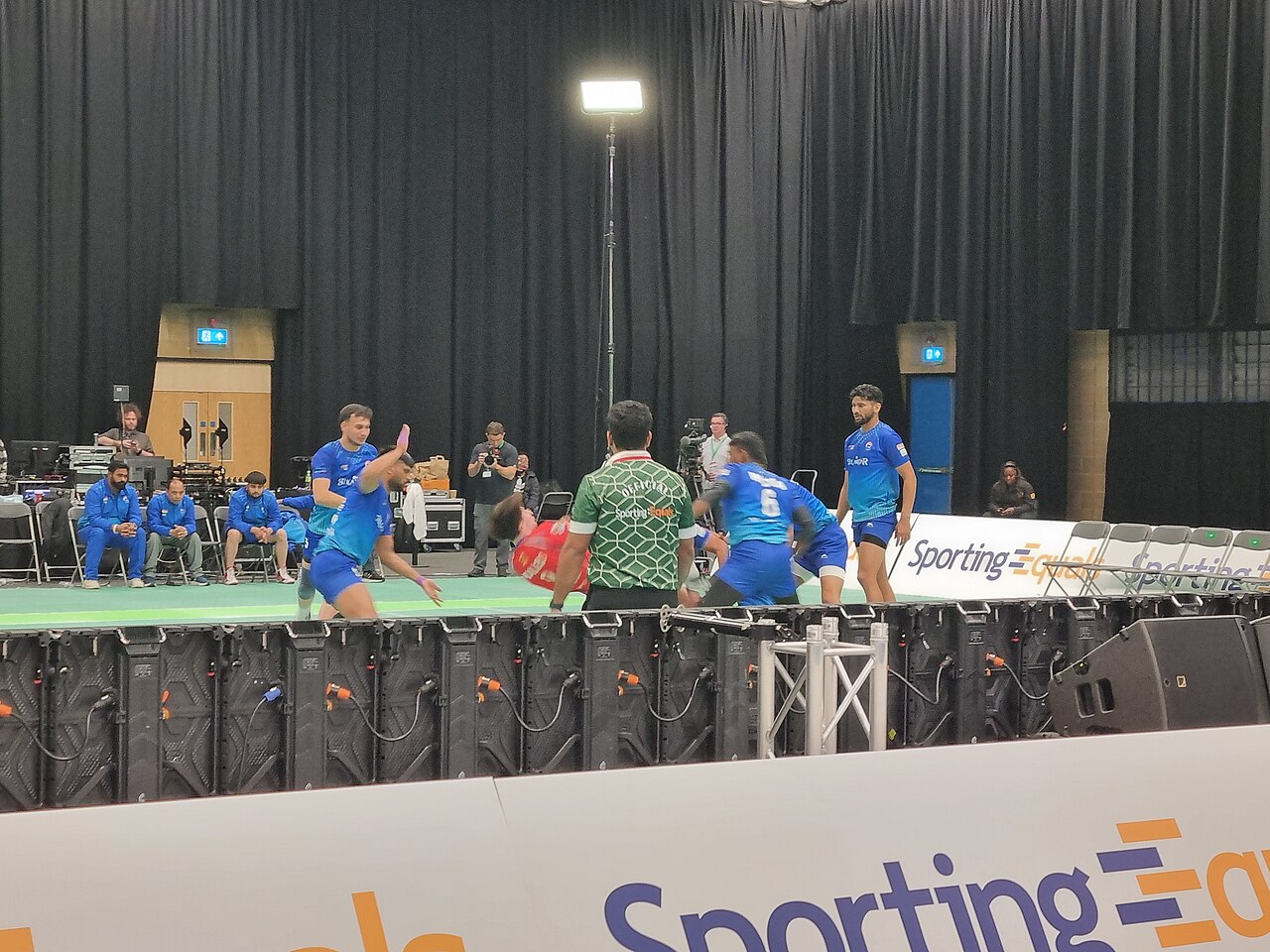
Head the other way out of Kothrud, towards the bypass, and you get to Balewadi, where Puneri Paltan play. A lot of professional teams are placed in cities chosen for the size of the market. This one was not. Kabaddi has been played across this part of Maharashtra at village and akhada level for generations, on mud long before there were mats, and long before anyone attached a league or a broadcast contract to it.
You can hear that in the hall. The noise for a well-judged toe-touch arrives before the commentary has finished naming the raider, because the crowd is not learning the sport from the broadcast. Half of them played some version of it at school. The Deccan Gymkhana end of Pune has kept that sporting habit going for a very long time, and kabaddi belongs to it rather than having been imported into it.
For betting, the thing to grasp is speed. Kabaddi scores constantly and an all-out takes a match in a single bite, so in-play prices swing much harder than a modest-looking points total suggests to somebody arriving from cricket. A side three points behind with a raider on the mat is not in remotely the same position as a cricket team three runs behind. Match winner, total points, raid and tackle lines and handicaps are all priced through the game, and the terms are on the kabaddi page.
The MCA Stadium at Gahunje sits out past Chandni Chowk towards the expressway, roughly an hour out of town. Live in Kothrud and you are, oddly enough, among the better-placed people in Pune for it — you start at the junction everyone else has to fight their way across the city to reach. From the Deccan side or from Camp, on a weekday evening in traffic, it becomes a genuine expedition.
That distance shapes what the ground looks like on television. A thin midweek crowd at Gahunje is a statement about the drive home at eleven at night, not a verdict on how much this city cares. Plenty of people who would happily walk to a ground in the middle of town watch the same fixture from a sofa in Mahatma Society instead. Judge the match, not the empty seats. Match odds, innings totals and in-play markets for games here are on the cricket page.
The account is not a Pune account. There is no city edition of the product and no state edition either — the same balance, the same open bets, the same markets, the same settled history and the same login screen, whichever screen you happen to open it on. Nothing in it is keyed to the city you signed up in, and a Kothrud postcode buys you neither more nor less than a Baramati one.
That is a statement about the product and not about anything wider. What the rules where you are actually permit is a separate question, and one worth checking for yourself if you move between states or spend a stretch working in another one, because that part does not travel with the account. People who bet mostly on local sport often assume there is some regional edition of the software; there is not. The markets, the odds, the UPI rails and the settlement rules are the ones set out on FairPlay India, and signing in on a new phone is the ordinary FairPlay login you already use.
One practical note about travelling. Keep the mobile number on the account reachable, because that is where the sign-in code goes. Losing access to that number is a slower thing to fix than forgetting a password, and it tends to happen at exactly the wrong moment. What the account holds and how to recover it is set out on the FairPlay ID page.
None of the above is much use without one, so, briefly. Signing up takes a couple of minutes: a mobile number, a password, the verification code that lands on that number, and your basic personal details. Use your real name, spelled exactly the way your bank has it. Not a shortened version, not the version your friends use. That one detail causes more held-up withdrawals than everything else put together.
After that, a deposit through any UPI app arrives in seconds and the balance is live immediately, so you can take a price on the next race at Pune within a minute of the money clearing. There is no separate wallet for racing and another for kabaddi. One balance runs the sport and the casino tables alike.
Start at FairPlay register, and if you would rather do the whole thing on a phone, installing it is covered on the app page. Bonus terms — what qualifies, what has to be turned over before a withdrawal — are better read before you claim anything than after, and they are set out on the bonuses page.
UPI deposits clear at any hour from any app, including at three in the morning in the middle of a European football night. Withdrawals go back to a bank account held in the same name as the betting account, and that check is the one that catches people out.
So before a first withdrawal, put the two spellings side by side — the one on your bank passbook and the one on your FairPlay account. If the bank has an initial where your account has the expanded name, sort it out in advance. It costs a minute now and several days later. The withdrawal page explains what is actually being compared, and customer support lists what to send across if a payout does get held.
Support runs in Marathi as well as Hindi and English, on live chat and on WhatsApp, around the clock and on race days. Open the conversation in Marathi and it stays in Marathi rather than being turned back into English halfway through. That is worth the most on payment questions, where a reference number and an exact name are what get a query closed on the first reply instead of the fourth.
A racing season run on shifting ground breeds a very particular hustle, and there is plenty of it about. Someone in a Telegram group lets it be known that he has a contact at the stables, or a man at the track, and that he knows what the going will really be by the fourth race. Sometimes there is a fee. Sometimes the fee is only for the confirmed selections.
Think about what is being claimed. The going is published. It is on the board, it is on the screen, and it updates for everybody at the same instant. Nobody is selling you access to it. What is on sale is the feeling of an edge, priced at whatever you will pay for it, and the guarantee wrapped around it is worth nothing because there is no mechanism underneath. If the horse wins, the group takes the credit. If it loses, the message quietly disappears.
Two more things worth being blunt about. You will never be asked to send money to somebody's personal UPI ID, or to hand cash to an agent who promises to credit your account for you. Deposits go through the app or the site, into your own account, and that is the only route there is. And check the address bar before you type a password anywhere — copied sign-in pages are the cheapest trick in Indian betting, so reach the site from a bookmark or from a link on these pages rather than from something a stranger forwarded you.
Keep the ordinary safeguards switched on too. Deposit limits, session reminders and self-exclusion all sit in the account settings, and a monsoon with a meeting most weekends is exactly the stretch where they earn their keep. What each one does is explained on the responsible gaming page.
The friend in Kothrud, for the record, backed neither horse in the fourth. He read the board again before the fifth and took a price about a mare who had run four times on soft that season and had not once been beaten far. She finished second. That is racing. But he was reading the right thing, which over a long wet season is the only part any of us actually controls.
FAQ
Ground that moves, Paltan markets, the drive out to Gahunje, and Marathi on chat.
Because the Indian calendar is staggered on purpose rather than by accident. Instead of every club chasing the same cool-weather dates, this one takes roughly July to October and fills months when other courses are dark. It is one of very few places anywhere that schedules a full season into a monsoon instead of around it, and the result is a racing year with far fewer empty stretches in it.
More than any other single factor, which is why it deserves reading first. Holding turf asks a horse to pull its feet out of the ground on every stride, and that suits one type of action while punishing another. A horse with strong figures on fast ground can look unrecognisable on soft, and the reverse happens just as often. Through these months, a record on similar going tells you more than a record overall.
Yes, and it is the thing newcomers most often miss. Rain here comes in bursts rather than settling in for the day, so a track riding good for the opener can be soft by the fifth race and drying again by the last. The official description is updated as the day goes on. Read it before each race rather than trusting the note you made at breakfast.
Match winner, total points, raid and tackle point markets, all-out markets and handicaps, with the prices moving all the way through the game. Kabaddi scores fast and a single all-out swings a match hard, so in-play here travels further than the low-looking totals suggest to anyone arriving from cricket.
Genuine, and it predates the league by a long way. The sport has been played across this part of Maharashtra at village and akhada level for generations, and Pune sits inside that tradition rather than beside it. Watch a crowd at Balewadi react to a do-or-die raid before the commentator has caught up, and you can hear the difference between an audience and a market.
Yes, on chat and on WhatsApp both, at any hour, race days included. Open in Marathi and the reply comes back in Marathi rather than being switched across to English. It counts for most on money questions, where an exact name or a reference number is what closes a query on the first reply instead of the fourth.
Roughly an hour out of town, past Chandni Chowk towards the expressway, so allow considerably more time than a city-centre ground would need — particularly for a weekday evening start. Plenty of Pune supporters follow midweek fixtures from home instead, which is worth remembering before you read anything into a half-empty stand on television.
India regulates online real-money gaming state by state rather than at a national level, and Maharashtra sets its own position. Those rules have kept changing and have been challenged in court, so the only thing that matters is what applies to you, in the place you are actually sitting. Check that before you bet. Nothing on this page is legal advice.
Explore FairPlay