

Match winner
Somebody has to walk off the winner, so there is no third column to worry about. Two prices, both of them twitching every time a point is played once the match is live.

Grand Slams, ATP & WTA
A Chandigarh January means fog sitting on Madhya Marg till well past nine and no good reason to leave the quilt. Melbourne, four and a half hours ahead, is already in bright afternoon sun with a third round on. Here is what FairPlay does with that match: the prices, the point-by-point board, and where your stake goes if a player pulls up injured.
Live & Upcoming
Whatever is being played this minute, plus whatever starts in the next few hours, with a back price and a lay price on each side. Every clock here is IST.
Prices shown are illustrative
Why Prices Look Extreme
Points are never banked in tennis. They are spent on games, games are spent on sets, and each transaction hands the slightly better player a slightly bigger share of what is left.
| Points won | Service games | Sets | Best-of-3 | Best-of-5 |
|---|---|---|---|---|
| 50% | 50.0% | 50.0% | 50.0% | 50.0% |
| 52% | 55.0% | 64.0% | 70.5% | 74.9% |
| 53% | 57.5% | 70.5% | 79.0% | 84.3% |
| 55% | 62.3% | 81.5% | 91.0% | 95.3% |
| 60% | 73.6% | 96.3% | 99.6% | 99.9% |
Two extra points in a hundred buys you a 70% match price. Look along the 52% row and sit with it for a second. A player who is barely, almost invisibly, ahead on points takes seven matches out of ten. Push that to 55% and it is nine out of ten. If you remember one thing from this page, remember that one, because it explains most of the prices that look wrong at first glance. A short favourite in an even-looking match is usually correct, and a 6-1 6-2 hammering is usually a handful of points going one way. The numbers come from a tidy symmetric model rather than from any real pair of players, and they are here to show the shape of the thing, not to price your next bet.
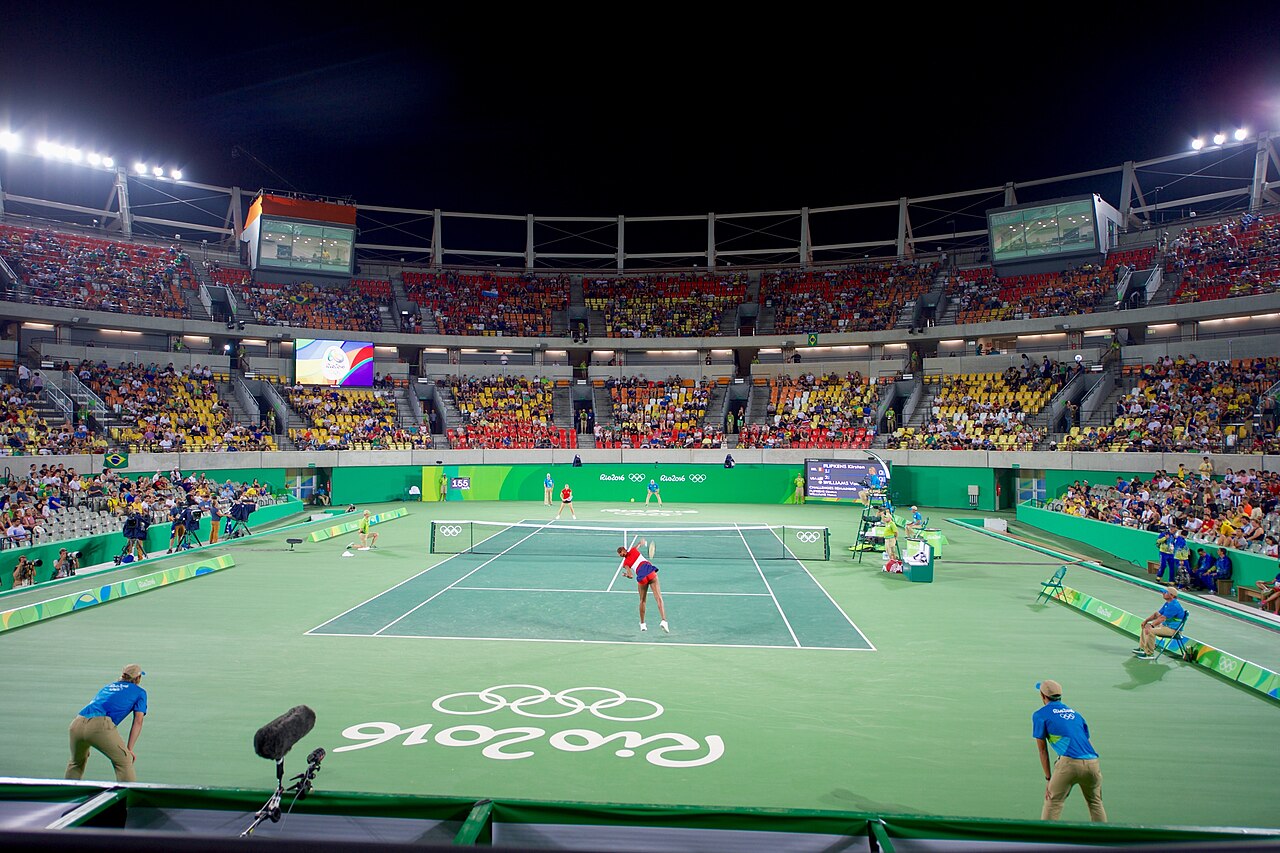
Markets
A main-draw match carries somewhere past forty markets, running from the plain two-way price down to game handicaps and exact set scores.
Somebody has to walk off the winner, so there is no third column to worry about. Two prices, both of them twitching every time a point is played once the match is live.
You pick the exact scoreline in sets — 2-0 or 2-1 in a normal tour match, all the way to 3-2 in a men's slam. The prices are longer than the outright, and the deciding-set lines are usually where the thinking pays.
One number for the whole match, and you go above it or below it. Two big servers on a fast court drag that number up; two grinders trading twenty-shot rallies on clay pull it back down.
The underdog is handed a few games before a ball is struck. Useful on the days when the favourite is priced so short that backing them straight feels pointless.
Fresh numbers after every point and every changeover. Nothing in Indian sport moves a market quite like a break of serve does here — one loose game and the whole board tilts.
The doubles draws are priced too, at the slams and at the tour stops underneath them. That includes the events where Indian pairs have a long history and a following that knows them well.
The Calendar In IST
One of these fortnights fits an Indian day beautifully and one of them will wreck your sleep for a fortnight. Better to know which is which in advance.
The kind one. Melbourne runs four and a half hours ahead of us, so the day session opens around 5:30 AM IST and the night matches wrap up by our teatime. In a Chandigarh January that means tennis and a quilt, which is close to ideal.
Paris gets going mid-afternoon here and the show-court night matches can still be running past midnight. Clay stretches everything out, so the totals lines on this fortnight sit higher than anywhere else on the calendar.
Easiest of the European two for an Indian household. Play opens mid-afternoon IST, and because London courts have to stop at 11:00 PM their time, nothing can drag on endlessly into your night.
New York is the cruel one. Day matches begin around 9:30 PM IST and a night final can still be going when the newspaper lands at your gate. Plan for that fortnight in advance rather than working it out at 4:00 AM.
Getting Started
Never used an exchange before? This is the whole thing, start to finish, with nothing assumed.
My brother-in-law drove over from Panchkula the night before because his geyser had given up, and the two of us ended up on the floor of the front room at half six in the morning with an Australian Open third round playing on a phone propped against the sugar tin. Outside, the fog had eaten the park. You could hear the milk scooter three houses away before you could see it. In Melbourne it was a bright afternoon and a name neither of us recognised was two sets down and serving to stay in the tournament.
That is what tennis honestly looks like in Chandigarh. Nobody in the sector rearranges their evening around it the way the whole street rearranges itself around an India match. Tennis turns up at odd hours, in bits, usually on a phone, usually with somebody's tea going cold beside it. Which is exactly why the live board carries more weight in this sport than in almost anything else on FairPlay — you are hardly ever watching from the first ball, so you are nearly always joining a match that has already gone somewhere.
Take the Australian Open row on the board further up this page. Two players, a back price of 2.20 against one of them and 1.72 against the other, minimum ₹100 on that row and a ceiling of ₹1,00,000. Say you like the longer one and you put ₹500 on him at 2.20. If that stake gets matched and he wins, ₹1,100 comes back to your wallet, of which ₹600 is profit. If he loses, the ₹500 is gone. There is no third outcome to worry about, because tennis does not do draws.
The 2.24 sitting next to it is the lay price, and that is the part people find odd at first. An exchange has no house taking the other side of your bet — there is somebody else, sitting in their own front room somewhere, who thinks the same player loses. Your back at 2.20 needs their lay to meet it. The small gap between 2.20 and 2.24 is simply the distance between what backers will accept and what layers will offer, and it narrows as more money arrives. On a slam match that gap is tight. On a first-rounder at a Challenger it will be visibly wider, which is worth remembering before you take a price out of impatience.
Then the match starts and none of those numbers hold still. Break serve in the opening game and your man's price shortens on the spot; get broken back and it drifts out again. If the outsider you backed at 2.20 wins the first set, you might see him tighten towards something like the 1.90 you can see on the ATP Masters row. That is the moment where you get a choice: sit with your original bet and take the full ₹600 if he closes it out, or lay him back at the shorter price and lock in a smaller result whatever happens next. The mechanics of doing that are laid out on in-play betting, and I would read it before you need it rather than at 7:15 in the morning with a set point being played.
At tour level, holding serve is the boring default and breaking is the event. That single fact explains most of what you will see the prices do. Football gives you ninety minutes and a draw to hide behind, so a first-minute goal is dramatic but not decisive. A break in the first game of a tennis set often is the set, and the match price moves like it knows that.
The useful part is that the pressure points are predictable. Deuce on a big server's delivery, 15-30 in a long set, the game immediately after a break when legs are wobbling — that is where the price gets decided and where an in-play position is either worth taking or worth closing. Two of us watching that Melbourne match spent the whole of one service game at 30-30 arguing about whether the man two sets down was actually serving better or just serving louder. He held. The price barely twitched. Twenty minutes later he broke, and it moved further in one point than it had in the previous half hour.
Tennis is the only sport on the board where a match can simply stop. Nobody reschedules it. A player retires hurt, the result stands as a retirement, and the markets settle under rules that were written for exactly this.
The broad shape: a match-winner bet is usually voided with your stake returned, unless the match had already got past whatever point of completion the rules define, while markets already decided by play that genuinely happened tend to stand. A finished set in a set-betting market stands. A total-games line the match has already sailed past stands. But the fine print differs between markets and between operators, and the terms shown on the event itself are the ones that will actually be applied to your bet. Our man in Melbourne had his ankle strapped at the change of ends in the third, and that is precisely the moment to stop and read rather than to stake.
A walkover is the simpler case. Nobody hit a ball, there is no contest to settle against, so everything voids and every rupee goes back where it came from.
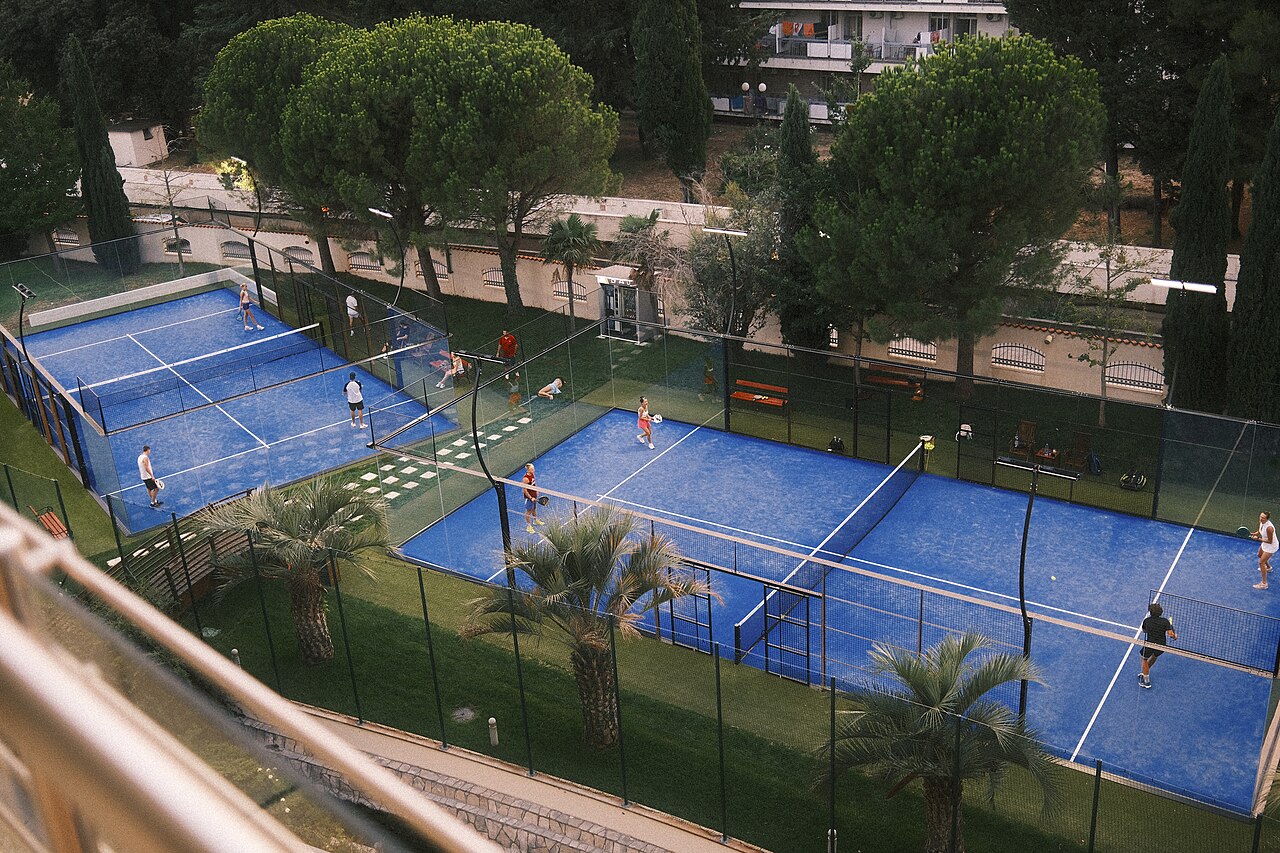
India's tennis history is largely a doubles history, and it shows in the conversations. At the courts in Sector 10 you will find men who can rattle off doubles pairings from twenty years ago and go blank on this week's singles seedings. In a market that carries a fraction of the money and a fraction of the attention, that kind of lopsided knowledge is worth something real.
Learn the format before you use it, though, because it is not the same game. Most tour doubles runs no-ad scoring, so deuce collapses into one sudden-death point instead of a long tussle, and the deciding set is replaced by a match tiebreak to ten. Both changes shorten the contest and pump up the randomness. The better pair still wins more often than not, but they convert less reliably than a third full set would let them. A doubles price that looks generous is often just an honest reflection of a format that keeps handing the underdog another door.
Grass and quick hard courts pay the server. More holds, more tiebreaks, higher totals lines, and matches settled by two or three points spread across two hours of otherwise even tennis. Clay hands time back to the returner, which brings breaks, long rallies and the most punishing matches of the year. Roland-Garros is where a five-setter stops being entertainment and starts being an ordeal.
What that means practically is that surface form beats general form. A player on a three-match hard-court run tells you less about their clay season than a single clay result does. When the tour swings to clay in April and again to grass in June, treat the first week of each swing as a fresh start rather than a continuation of whatever was happening before. Half the value in early-swing matches comes from people pricing last month's surface.
There is a homely version of this too. Anyone who has played on the hard courts around the tricity through a Chandigarh summer, then tried the same shots in December when the ball comes off dead and low, already understands it in their arms. Conditions are not a detail on top of the sport. They are part of it.
One thing that surprises people who assume everything in India is state-by-state: the account does not change shape when you travel. The same FairPlay login opens the same wallet, the same board and the same list of open bets in Chandigarh, in a hotel room in Kochi, or on a phone somewhere between Ambala and Delhi with the signal dropping in and out. Balances do not get split by region. A bet you placed on a laptop at home is sitting there in the app when you check it from the train.
Deposits behave the same way. UPI is UPI in every state, so the money moves at the same speed from a Chandigarh bank account as it does from a Chennai one, and withdrawals go back to the same verified account regardless of where you happened to be standing when you asked for them. If you are moving cities for work, nothing needs redoing — you log in and everything is where you left it.
What genuinely does vary is the law, and that is not a technical detail. A handful of states restrict online play outright, and the rules there apply to you as a person rather than to your account. FairPlay India sets out how the picture differs across the country, and reading it before your first deposit is a five-minute job that saves a lot of guessing later. Nothing in this guide replaces knowing the position where you actually live.
Assume you have read this far and have never placed a bet on anything. The order that works is: sign up, verify, deposit small, bet small, and only then get clever.
Signing up asks for a mobile number, a password and a one-time code to prove the number is yours. It takes about as long as ordering food. FairPlay register walks through the form field by field, and FairPlay ID explains what the account identifier is and why you should never share it. Get your own details right the first time — the name on the account has to match the name on the bank account you eventually withdraw to, and sorting out a mismatch later is far more tedious than typing carefully now.
Then put in a small first deposit through UPI and place exactly one bet, at ₹20, on the outright winner of a match you intend to watch from start to finish. Not the longest price on the board. Not four legs of an accumulator. One match, one small stake, and then watch what the number does every time a point is played. Two hours of that will teach you more about how prices behave than a week of reading, this page included. Once the rhythm feels obvious, look at set betting and totals, and read withdrawals before you have anything worth withdrawing rather than after.
Every tricity WhatsApp group with more than thirty people in it eventually acquires a man with inside information. He has a fixed match. He has a contact. He needs you to send the money to his personal UPI so he can place it for you at a better rate. Do not.
The rule is simple enough to remember while half asleep: your money goes into your own account through the app, and it comes out to your own verified bank account. Any step involving somebody else's UPI ID, somebody else's bank details, or a person who offers to "run the account for you" is not a shortcut, it is the whole scam. Nobody needs your password. Nobody legitimate needs your one-time code, and support staff will never ask for either.
The second tell is certainty. Read the table on this page again — the entire sport is built on tiny margins compounding, which means even a genuinely dominant player is a probability and not a promise. Anyone selling a guaranteed tennis result is selling confidence, and you are the product. If a price looks impossibly generous on a site you have never heard of, that is not luck either; check you are on the real domain, and use customer support to confirm anything that feels off before money moves.
The Australian Open is a gift for us. Melbourne being four and a half hours ahead means play runs right through an Indian morning, and in January, when Chandigarh is fogged in and nobody wants to go anywhere before ten, that is close to perfect. Wimbledon and Roland-Garros start mid-afternoon here. The US Open is the one that will hurt you, with night matches finishing after the sun is up in India.
A five-setter ending at six in the morning is exactly the situation where decisions get worse without feeling worse. You are tired, you are already invested, the stakes creep up and it all seems reasonable at the time. If you follow the American swing properly, put deposit and session limits in place before the fortnight begins, not somewhere in the middle of it — responsible gaming covers the tools and how to set them, and live sports shows you what is actually running at which hour IST so you can pick your nights instead of losing all of them.
For the record, the man two sets down in Melbourne took the third on a tiebreak, held on through the fourth, and lost the fifth without ever getting to a break point. By then the fog outside had thinned to the point where you could make out the far end of the park, and my brother-in-law had gone to see about his geyser. The price had been telling us how it would end for about forty minutes. That is usually the case, once you know how to read it.
FAQ
How prices are built, how odd endings settle, what the surface does, and when the slams actually start here.
Tennis never adds your points up. It cashes them in, again and again, and every time it does the gap widens. Four points make a game, six games make a set, and the scoreboard resets each time, so the player who is fractionally better keeps getting fresh chances to convert that fraction. Run the simplified even model in the table above and a player taking 55% of points ends up holding about 62% of service games, winning 81.5% of sets and 91% of best-of-three matches. So a pairing that looks close on form can honestly carry a very short price, and a 6-1 6-2 scoreline rarely means one player was twice as good.
Yes, and the format is the reason rather than the players. Five sets simply give the better player more attempts to cash in the same small advantage, so luck has less room to survive. On the same model, an edge worth 91% over best-of-three is worth 95.3% over best-of-five. That is why underdog prices at the men's slams stretch out further than they do at ordinary tour events, and why a first-round shock over five sets is treated as a much bigger result than the same scoreline in a Masters draw.
This is the settlement rule to learn first, because tennis is the sport where play can simply stop. In most cases a match-winner bet is voided and your stake comes back, unless the match had already reached whatever point of completion the rules define. Markets that were settled by play that actually happened — a set-betting market where the set finished, a total-games line the match had already gone past — generally stand as they are. The exact wording varies by market and by operator, so the settlement terms printed on the event itself are the ones that decide it. If a player has called for the physio twice and you are still thinking about an in-play stake, read those terms first rather than after the handshake.
A walkover means the withdrawal happened before anyone stepped on court, so not one point was contested. With no match to settle against, every market on that fixture is voided and every stake goes back. Keep it separate in your head from a retirement, where play did start and a few markets may already have been decided by the games that were completed.
Far more than newcomers expect. On grass and quick hard courts the serve is king, which means holds pile up, tiebreaks arrive and the totals lines climb. Clay takes the sting out of the ball and hands the returner time, so breaks are ordinary, rallies stretch and matches run long. The same two names can look like different players a month apart. Recent results on the surface being played will tell you more than recent results in general.
It rewards anyone who has bothered to learn the rules, and plenty of Indian followers have. Most tour doubles is played with no-ad scoring, where deuce becomes one sudden-death point, and the third set is replaced by a match tiebreak to ten. Both changes cut matches short and let randomness in, which is why the underdog converts more often here than the raw quality gap suggests. If you know the doubles draw better than the singles draw — and a lot of us here do — that knowledge is worth more in a market carrying less money.
Melbourne is the friendly one, with play from roughly 5:30 AM IST because Australia is only four and a half hours ahead of us. Wimbledon and Roland-Garros both open mid-afternoon here and run on into the small hours, though the London curfew keeps Wimbledon from going all night. The US Open is the difficult fortnight: day matches begin around 9:30 PM IST and a night session can finish after sunrise in India.
Markets open at ₹20, and each row on the board carries its own floor and ceiling on top of that. The slam and main-court matches hold the deepest money, so the prices there are tightest. A first-rounder on an outside court at a small event will have thinner markets and a wider gap between the back and the lay price.
The account itself does not change shape depending on where you are standing. The same login, the same wallet balance, the same board, the same list of open bets, whether you open it in Chandigarh, on a train through Ambala, or at a cousin's place in Kochi. Deposits run over UPI, which behaves identically nationwide. What does vary from state to state is the law that applies to you, and a handful of states restrict online play altogether. The FairPlay India page covers that ground properly, and knowing where you stand before you deposit is on you rather than on the app.
Start with a match you are actually going to watch, not the one with the longest price. Open an account, verify the mobile number, put in a small first deposit over UPI, and place one bet at ₹20 on the outright winner of a match you will follow to the end. Watching a price move point by point with even a tiny stake on it teaches you more in two hours than a week of reading about it. Once the mechanics feel obvious, then look at set betting and totals.
Two tells cover almost all of it. The first is anybody asking you to send money to a personal UPI ID or bank account rather than depositing through the app itself — a genuine deposit never travels through a middleman. The second is certainty. Nobody knows how a tennis match ends, and the person guaranteeing a result in a group chat is either selling you something or setting you up. Add a third for good measure: never hand your password or your one-time code to anyone, including someone claiming to be support staff.
Explore FairPlay