

Full Time Result
Home, draw or away over ninety minutes and whatever the referee adds on. A cup tie that runs into extra time or penalties still settles on the normal-time score.

120+ Competitions
Rain on the shutters, a phone propped against a glass of sulaimani, the Blasters kicking off at half past seven. That is what football on FairPlay looks like for most of us in Kerala — the ISL early, England through the evening, Europe long past midnight. Handicaps explained rather than assumed. Stakes start at ₹100.
Prices shown are illustrative
Watching From India
Following European football from Kozhikode is half fixture-reading and half arithmetic. Here is the arithmetic already done.
| Competition | Typical IST kick-off | Worth knowing |
|---|---|---|
| Indian Super League | 7:30 PM | Fits an ordinary Indian evening. Nobody loses a night's sleep over it |
| Premier League, early Saturday | Around 5:00–6:00 PM | The English lunchtime slot, and the easiest match of the week to catch |
| Premier League, main Saturday block | Around 8:00–8:30 PM | The 3pm kick-offs in England, arriving exactly at Indian dinner time |
| Premier League, late Saturday | Around 10:30–11:00 PM | Often the pick of the round, and still finished before one in the morning |
| Premier League, Sunday | Around 7:00–10:00 PM | Two or three games strung across the evening, ending near bedtime |
| Champions League | Around 12:30–1:30 AM | Both midweek slots land after midnight. You are choosing football over sleep |
| La Liga | Around 8:00 PM – 1:30 AM | The widest spread of any league, and the biggest fixture usually sits late |
| Bundesliga, Saturday | Around 7:00–10:00 PM | A German Saturday afternoon is an Indian Saturday evening, near enough |
Europe changes its clocks. India never has. Twice a year, in late March and again in late October, the whole European fixture list slides by an hour while Indian Standard Time sits exactly where it was. A match you have watched at 8:30 all winter suddenly starts at 7:30, or the other way about. Every spring somebody in our group turns up for the second half swearing the app has moved the time on him. On those two weekends, check the clock inside the fixture instead of trusting habit.

Betting Markets
A big European tie opens with more than 180 of them. Learn these first and the rest of the board reads itself.
Home, draw or away over ninety minutes and whatever the referee adds on. A cup tie that runs into extra time or penalties still settles on the normal-time score.
One side starts with a goal in hand or a goal owed, which deletes the draw. Quarter lines such as -0.25 cut your stake in two, and there is a worked example further down this page.
Most of the attention sits on 2.5, with 1.5 and 3.5 priced beside it. The competition tells you more about the right line than either team name does.
A straight yes or no on both sides finding the net. Generous in open leagues, and a quiet way to lose money in a cagey one like the ISL.
Pick the exact final scoreline. Prices are long, and the market becomes genuinely tradeable in-play once you can see what shape a match has settled into.
Your stake comes back if the player never gets on the pitch at all. Come on after somebody has already scored and the bet is normally graded a loser.
Two of the three results covered at a shorter price. Often the calmer way to take an away underdog in a competition where goals are scarce.
Repriced from scratch every time somebody scores. The quickest-moving football market on the board, and the one a red card hits hardest.
The last Blasters game I watched properly was from a tea shop off Mavoor Road, shutters half down because the October rain was coming in sideways off the sea. Kerala Blasters against FC Goa, kick-off at half past seven, which in Kozhikode means the shop fills with men who have just closed their counters for the day. Two phones flat on the table between the glasses: one running the match, one running the board. Kerala were 2.62, the draw 3.25, Goa 2.78. A game the market could not separate, which is what a Blasters fixture usually looks like.
Nobody in that room was betting seriously. There was ₹100 on the draw from the man who repairs phones next door, ₹500 on under 2.5 from somebody's nephew home from college, and a very long argument about whether Goa travel well in wet weather. That is the honest scale of it in Malabar — small stakes, loud opinions, and a match half the room has already seen a rougher version of at the sevens grounds up the coast. What follows is what actually happened on those two phones over the next hour, because the mechanics of a football bet make far more sense with a real evening attached to them.
Say you fancy the Blasters but not enough to want the straight result at 2.62. The handicap board will normally offer you -0.25 on the home side instead. Put ₹1,000 on that and the platform quietly cuts your stake down the middle: ₹500 goes onto the 0 line and ₹500 onto the -0.5 line. You have placed one bet and you are holding two.
Three things can then happen. Kerala win, and both halves win, so you are paid on the full ₹1,000 at the handicap price. Kerala lose, and both halves lose. The interesting result is the draw, which is exactly what a wet ISL evening produces more often than anyone would like. On a draw the ₹500 sitting on the 0 line is a push and comes straight back to your wallet, while the ₹500 on -0.5 is gone. You are down ₹500 instead of ₹1,000.
That is the whole idea. A quarter line is a hedge welded into the bet. It lets you back a team you only slightly prefer, and the draw — the result that kills more Indian football bets than anything else on the card — costs you half rather than everything. Once that lands, the rest of the handicap board stops looking like code and starts looking like a menu.
The whole and half numbers around it are far simpler. A team at -1.5 has to win by two clear goals before you collect. A team at +1 collects if they win or draw, and your stake comes back untouched if they lose by exactly one. Nothing splits, nothing half-pushes.
On that same evening the under 2.5 bet was, on paper, the boring choice. It was also the correct read, and not because of anything either side had done in the previous month. Indian Super League matches are simply tighter than English ones. A fixture that would be a comfortable over in the Premier League lands under here often enough to matter.
The habit worth building is to set your expectation from the competition first and adjust for the two teams second. People who grew up watching English football and then bet the ISL with English instincts lose on totals with impressive regularity. I have done it myself, at half past seven on a Saturday, with the evidence sitting right there in the last ten scorelines had I bothered to scroll.
Football in-play behaves nothing like cricket in-play, and the first live match you watch with the board open teaches you that faster than any explanation. A cricket price drifts, ball by ball, in tiny increments. A football price sits nearly still for eleven minutes and then jumps — a goal, a penalty given, a second yellow. In between, very little moves at all.
Around each of those events the market suspends for a few seconds while the price is rebuilt, then reopens somewhere new. That pause is not the app failing on your connection, which is what everybody assumes the first time it happens on patchy Kozhikode monsoon data. It is the market refusing to take bets during the exact moment when nobody can agree what the score is.
The practical lesson from that evening: decide your position before the event, not during the suspension. By the time the next goal market reopens after a red card, the number you were looking at has already gone. Watching two or three matches with the board open and no money on them is worth more than any amount of reading about it, and costs nothing.
A confirmed line-up an hour before kick-off moves football prices harder than any amount of form reading. A first-choice striker left out before a European tie can shift a match result price by ten percent or more, and rotation is heaviest in precisely the weeks when the fixture list is at its worst.
For those of us watching from India there is a practical problem bolted onto that. Confirmed teams for a 12:30 AM Champions League match arrive at around 11:30 PM IST. If you are placing bets before bed and setting an alarm for the second half, you are betting on a projected eleven rather than a real one. That is a genuine cost. Either stay up the extra hour or accept, honestly, that you are guessing at the team sheet.
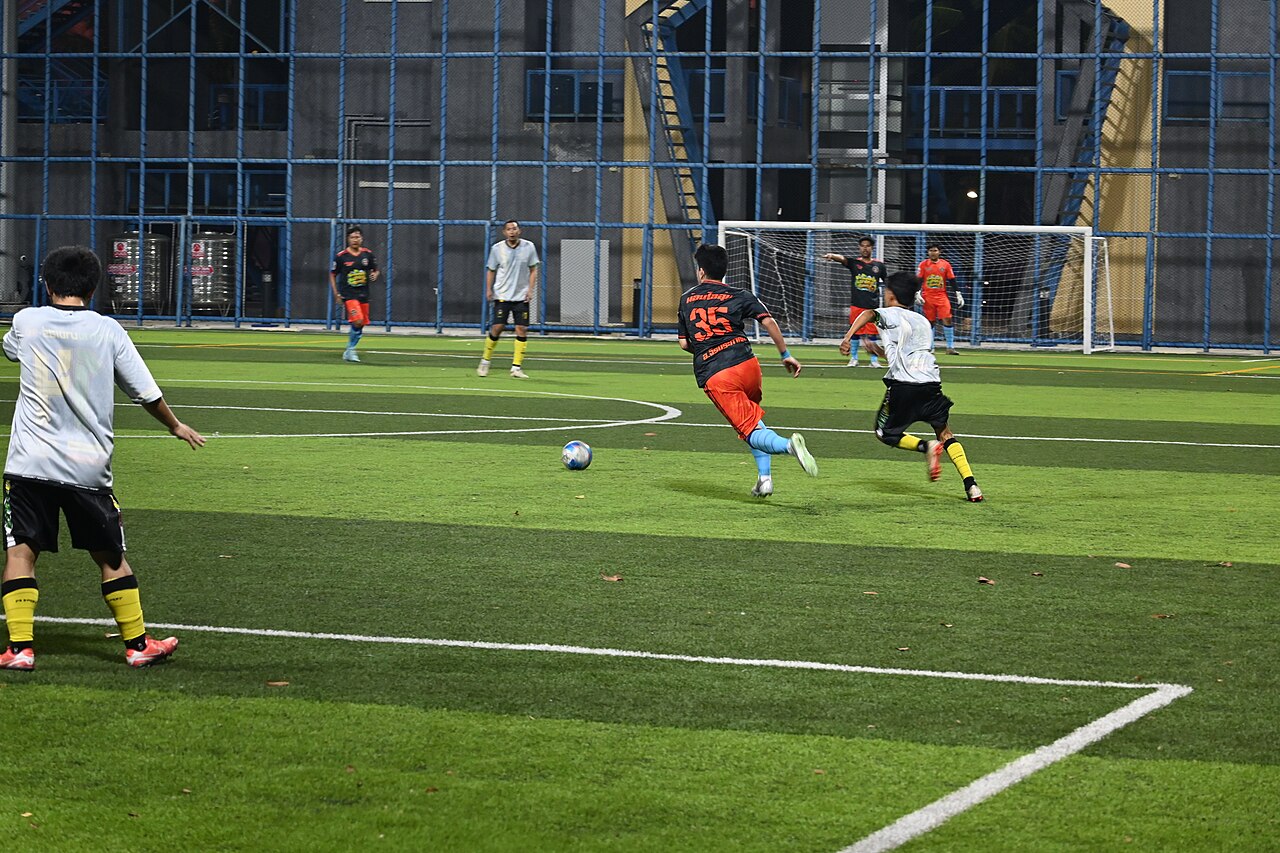
Cricket takes most of the betting money in most Indian cities. Kerala and Bengal are where that flips over. Walk past a ground in Kozhikode on a dry evening — the corporation stadium at Mananchira end, or any of the smaller pitches out towards Nadakkavu — and there is a match on with a crowd around it. The sevens circuit up and down Malabar draws numbers that would embarrass some professional clubs.
This matters for a reason that has nothing to do with loyalty. Markets are only as sharp as the number of informed people betting into them. A Premier League fixture is priced by an enormous, well-read crowd, and you are very unlikely to know something they have missed. An ISL match, or the Kolkata derby, carries a thinner market with fewer eyes on it. If you genuinely follow Indian football — if you know which full-back has been struggling since pre-season — that thinness is where whatever edge you have actually lives.
A question that comes up constantly in that tea shop: does any of this change if you move? It does not. One FairPlay login works from anywhere in the country. The prices, the limits, the market list and the wallet balance are identical whether you open it here, in a hostel room in Coimbatore, or on a rooftop in Bengaluru.
That matters more in Malabar than in most places, because so many families have somebody working somewhere else. Half our group watches the same ISL fixtures from another state entirely, on the same prices, at the same time. Deposits and withdrawals run over UPI the same way in every state, and your betting history follows the account rather than the handset it was opened on. The FairPlay India page has the state-by-state detail if you want it. Change your phone, change your city, change your bank — the account is still the account.
None of the above requires you to stake anything. The board is open to look at. You can pull up the football list right now and simply watch what a price does when a team goes down to ten men, and that hour will teach you more than this page will.
When you do want to place something, FairPlay register takes a few minutes: a mobile number, a one-time password, and a name that matches whatever ID you will eventually verify with. Get the verification done early, on a quiet afternoon, rather than at 1 AM when you actually want the money out. Fund it over UPI and start at ₹100 on a match you were going to watch anyway. Treat the first month as an education in how settlement rules behave, not as an attempt to make money.
Every ISL season the same thing happens here. A Malayalam-language group appears on Telegram or WhatsApp, claims to have somebody inside a club, posts a run of confirmed-looking predictions, and starts charging a few thousand rupees a month for the next batch. The bolder ones move on to offering fixed matches outright.
None of it is what it claims to be, and the trick is easy enough to describe. Send one tip to half a large list and the opposite tip to the other half. Half the list sees a winner. Drop the losers, repeat it four times, and you are left with a small group of people genuinely convinced you have never been wrong. That conviction is the product being sold. Nobody with a fixed match needs your subscription money.
Two harder rules go with that. Nobody from FairPlay will ever ask for your password or your one-time password — not over WhatsApp, not on a call claiming to be support, not in any circumstance at all, and anybody who asks is trying to empty your wallet. And an agent who offers to top your account up for cash handed over in person is pushing money through his own account, which is how people end up with funds they cannot withdraw and no one to complain to. Deposit yourself, from your own UPI, into your own account. If a message looks like it came from FairPlay and wants you to act immediately, close it and open the app yourself.
European fixtures take up to ₹2,00,000 and ISL matches up to ₹50,000, and each match prints its own ceiling on the board rather than leaving you to find out at the slip. Full-time markets settle on ninety minutes plus stoppage. If you want extra time and penalties included, that is a different market carrying its own price, and the label says so.
Abandonments follow the rule written on the market itself, which usually means a void and your stake returned unless the fixture is completed inside a stated window. Winnings reach the wallet at settlement, and a withdrawal from a verified account is generally in the bank inside ten minutes, which you appreciate at two in the morning after a European night. If football is where most of your money goes, set a deposit limit in July, before the season starts, rather than in February when you are chasing something back. This is for adults only, eighteen and over.
That Blasters evening ended the way most of them do. Everyone in the shop was certain they had read it correctly, the rain was still going, and perhaps ₹600 changed hands across the entire room. Which is roughly where football betting belongs: an evening made slightly sharper, and never a plan for the rent.
FAQ
Handicaps, IST kick-offs and settlement rules, answered without the hedging.
ISL matches start at 7:30 PM IST, which is the friendliest slot on the whole list. Premier League Saturdays run from roughly 5:00 PM through to about 11:00 PM IST, and the Sunday games sit across the evening. Champions League football is a post-midnight commitment, generally between 12:30 and 1:30 AM. One thing catches people out every single year: European clocks shift in late March and late October while Indian Standard Time never moves, so all of those European times slide by an hour twice a season.
It hands one team a head start or a deficit before a ball is kicked, which takes the draw out of the market and lets a mismatch be priced close to even money. A favourite at -1.5 has to win by two clear goals for the bet to land. An underdog at +1 pays out if they win or draw, and returns your stake if they lose by a single goal.
The stake is divided between two lines. Back -0.25 with ₹1,000 and you are really holding ₹500 on the 0 line and ₹500 on the -0.5 line. A win pays both halves. A defeat loses both halves. A draw pushes the ₹500 on the 0 line straight back into your wallet and loses the ₹500 on -0.5, so the result costs you half the stake rather than the lot. That built-in half-hedge is the entire reason quarter lines exist.
No, it stops at ninety minutes plus whatever stoppage the referee plays. A knockout tie that runs into extra time or a shootout is still graded on the score at the final whistle of normal time. Competitions that go to extra time do offer a separate market that includes it, priced on its own, and the market label always tells you which of the two you are in.
A lower one than your Premier League instincts suggest. The Indian Super League is a tighter competition than the big European leagues, so the 2.5 line that feels natural for an English fixture often sits above where an Indian match actually lands. Under 2.5, and no on both teams to score, come in more frequently here than somebody who mostly watches European football would ever expect.
Yes, and it behaves nothing like in-play cricket. Football prices sit almost still and then lurch — a goal, a red card, a penalty awarded — rather than drifting ball by ball the way a T20 market does. Trading suspends for a few seconds around each of those events while the price is rebuilt, then reopens. Next goal is the market that swings furthest, and it is the one most people end up trading after half-time.
If he never gets on the pitch, the bet is void and the stake returns to your wallet untouched. If he comes on after somebody has already scored, the standard rule grades it a loser rather than voiding it. The exact wording sits on the market itself, and it is worth a ten-second read before you back a player who might well start on the bench.
Between ₹100 and ₹2,00,000 on the major European fixtures. ISL matches take up to ₹50,000 and the smaller competitions sit below that again. Derbies and knockout ties carry the highest ceilings of the year. Every fixture prints its own maximum on the board, so you never have to guess before typing a stake into the slip.
Explore FairPlay